$2,200 a partner day 000-000-0000

Practice area

Sales and growth

Where the revenue comes from, how concentrated it is, what happens to an enquiry, and what you charge for the work.

  • two engagements
  • From $10,800
  • five to ten days

“One customer is nearly half our revenue and I have stopped sleeping.”

Two questions, and most owners can answer one of them quickly. Where did last year's revenue actually come from? And what happens to an enquiry between arriving and being quoted? The second is usually the more uncomfortable, because the honest answer is that it depends who happens to see it.

We take two years of sales apart by customer, by kind of work and by how it arrived, which nobody enjoys and everybody needs, and the picture that comes out is usually more concentrated than the owner expected. Concentration is not automatically a problem — a business with one excellent customer on good terms is not in trouble — but it is always a decision, and it is worth making it on purpose rather than discovering it during a bad quarter. Then the quoting: what you charge, how you arrive at it, which jobs lose money at the current price, and what happens if you raise it. That last one is where most of these engagements earn their fee, and it is the conversation owners most reliably put off.

What we would actually look at

In roughly this order

  • Two years of revenue by customer, by kind of work and by how it arrived
  • How concentrated it is, in a form you could show a bank
  • What happened to the last twenty enquiries, one at a time
  • The last fifty quotes next to what those jobs actually cost to do
  • Which kinds of work lose money at the current price, and by how much
  • What a price rise would do, worked through on your own numbers rather than in general

The engagements

What you can buy, and what it costs

Days are chargeable days. Weeks are the elapsed time, which is always longer. The fee is the first multiplied by the day rate and there is nothing else in it.

Sales and growth. Days are chargeable days; weeks are how long it takes on the calendar, which is always longer. The fee is the day rate multiplied by the days and there is nothing else in it.
EngagementDaysOverFee
Where the revenue comes from six to ten days four to six weeks $10,800 to $18,000
Pricing and quoting five to eight days four to six weeks $11,000 to $17,600

Where the revenue comes from

$10,800 to $18,000

Last two years of revenue taken apart by customer, by kind of work and by how it arrived, and an honest look at how concentrated it is.

  • six to ten days over four to six weeks
  • blended day, $1,800

The first week: A day getting the sales data out of whatever it is currently in, which is usually the hard part.

What you are left holding: A written breakdown, a concentration picture you can show a bank, and a short list of what to do about it in order.
Pricing and quoting

$11,000 to $17,600

What you charge, how you arrive at it, which jobs lose money at the current price, and what happens if you raise it.

  • five to eight days over four to six weeks
  • partner day, $2,200

The first week: A day with your quotes and your job costs side by side. Most of the answer is visible by the end of it.

What you are left holding: A written pricing method, worked through on your last fifty quotes, and a script for the conversation with existing customers.

How that fee is arrived at

  • Blended day× six$10,800
  • The same rate, at the long end× ten$18,000
  • Travel, materials and anything bought for youat cost
  • What you would be quotedsix to ten days$10,800 to $18,000

The day rate is $1,800 and it is on the fees page. That multiplication is the whole of the pricing model: there is no retainer hidden inside it, no percentage of anything and no success fee.

Where this stops

What this is not

We do not sell for you and we do not take a commission or a percentage of anything we help you win. A fee that moves with the outcome would make every piece of advice here suspect, which is a poor trade for a share of a quarter.

Everything we do not do, and who we send you to

A plain closed door in an unbroken wall

A worked example

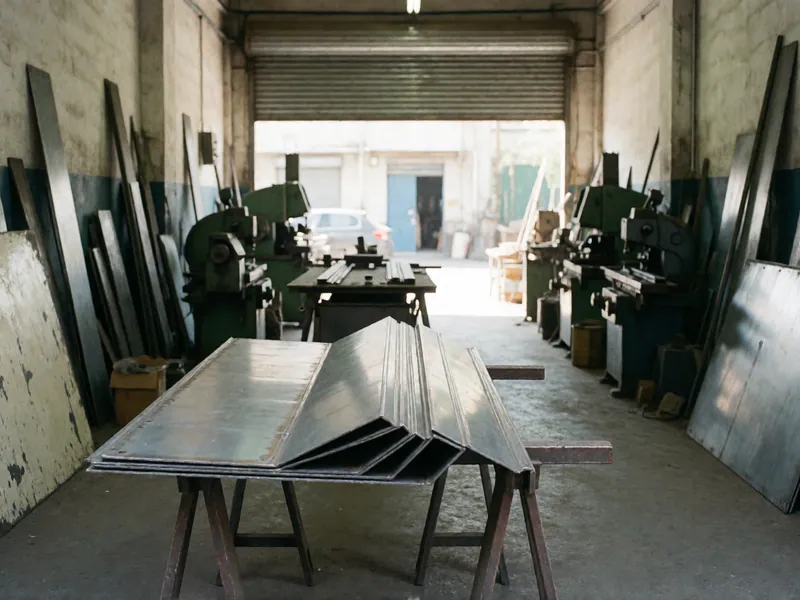
The fabricator whose small jobs paid for nothing

Light manufacturing and fabrication · Twenty-four people, one site in Maspeth

Revenue up two years running, the owner working six days, and the bank balance flat. Quotes were built from a per-hour figure that had last been checked four years earlier and did not include setup, and setup on a small job is most of the job.

What we did: Follow the job for two weeks, then every quote from the previous year put next to what the job actually took. Six days over five weeks.

The whole example

Every case study on this site is a composite. Every case study on this site is an illustrative composite assembled from several businesses. No client is named, no logo appears, and there is not a single testimonial on this website attributed to a person — a fabricated one would be the one genuinely dishonest thing a consulting site can do.

Light manufacturing and fabrication

Worth reading first

Is it a sales problem or a delivery problem?

Almost every owner who calls us has decided which one it is before they pick up the telephone, and about a third of them have decided wrong. Here is how to tell in an afternoon.

Questions

What does it cost?

A partner day is $2,200, a blended day is $1,800 and a consultant day is $1,400. Every project on this site is a number of days at one of those three rates, and the fee range printed against it is exactly that multiplication. The smallest piece of work here is four days.

Why do you publish your rates when almost nobody else does?

Because the alternative is that every first meeting spends twenty minutes on a question that has one number in the answer, and because a fee that is only revealed after you have explained your problems is a fee arrived at from your problems.

Is the first meeting really free?

Ninety minutes, no fee, no obligation, and no proposal at the end of it — you get an opinion. Roughly one in four ends with us saying that we are not the right thing for this, which is why we can afford to give the time away.

How long does a piece of work take?

The smallest is about three weeks and the largest runs for two years. The days and the weeks are different numbers and both are printed against every engagement, because six days spread over five weeks is what actually happens.

Sales and growth · from $10,800

Start with the assessment, or telephone

The assessment takes about four minutes and gives you a written summary of what your answers suggest and which engagement addresses each thing. It is indicative and not professional advice, and it is a better opening than a blank contact form. If you would rather skip it, the telephone works and the first meeting is ninety minutes and free.