Light manufacturing and fabrication
Quoting is the whole game and most small shops quote from memory. Job costing that runs afterwards rather than before is where the money quietly goes.
000-000-0000 · closed Sundays
Why here
A consultancy in Woodside rather than in Midtown is a decision about who the clients are, and it is visible in the fees.
The businesses this firm works with are in Maspeth, Long Island City, Ridgewood, Greenpoint, College Point and the industrial edges of the Bronx. They are workshops, warehouses, kitchens, yards and depots. Almost none of them is in Manhattan, and a consultancy with a Midtown address is charging its clients for a rent that exists to impress a different sort of client altogether.
Most of Queens, Brooklyn and the Bronx is inside an hour by van from here, and a great deal of it is inside forty minutes. That is why site work is priced the same wherever it happens, and it is why we can be on a floor at half past seven, which is the hour at which a business shows you what it is actually like.
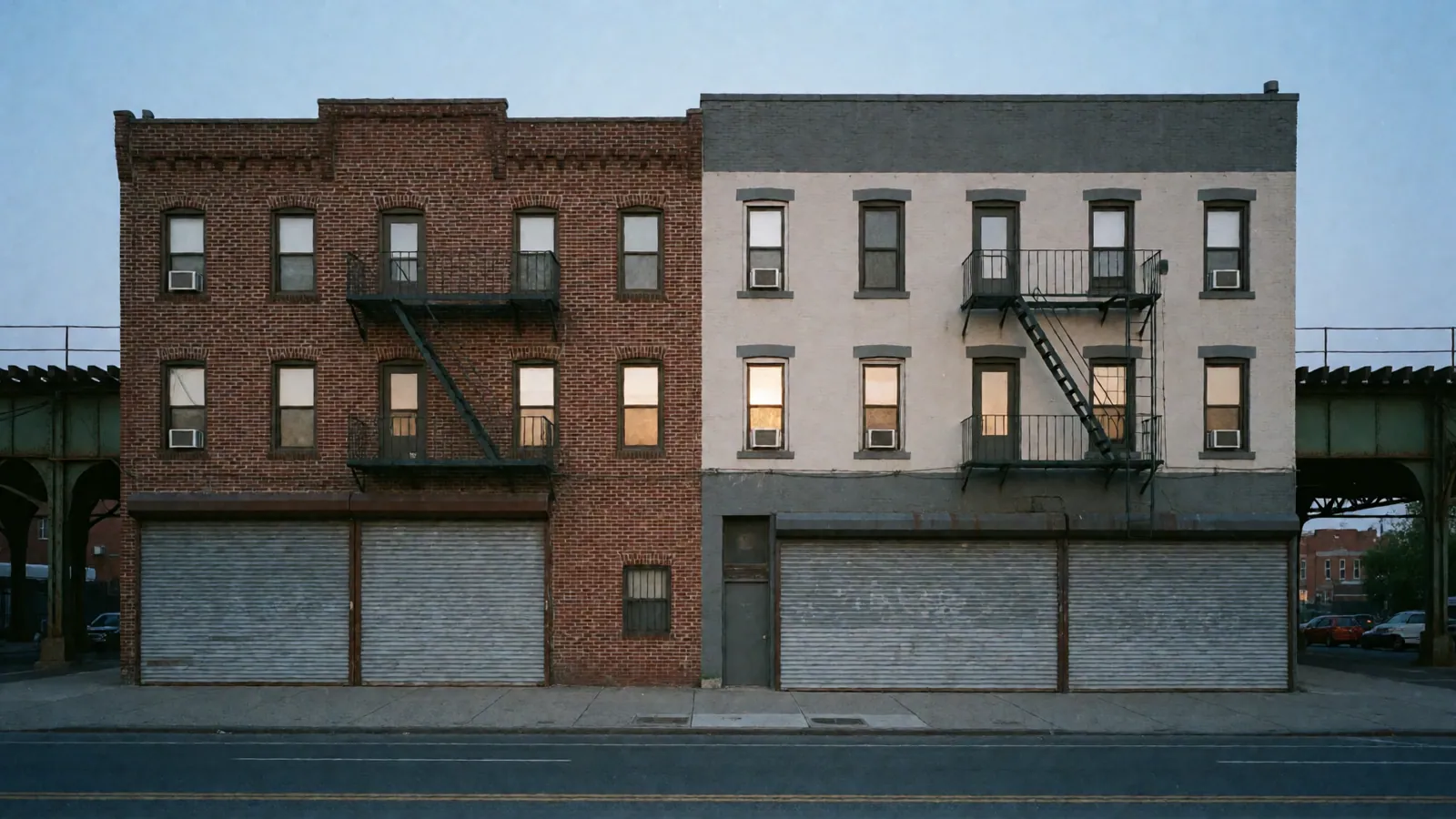
Two- and three-storey brick, fire escapes, a hardware supplier, an auto shop, two food businesses and a lot of apartments above all of it. The elevated line runs a few streets over and you can hear it. It is a working neighbourhood rather than a scenic one, and the office is two rooms on the first floor above a street that looks like most of the streets our clients work on.
That list is the honest reach of a six-person firm that does most of its work on client premises. Further than that and the travel starts costing you more than the advice is worth, and we will say so rather than take the work and charge for the driving.
61st Street-Woodside is four minutes' walk and it is unusually good: the 7 and the Long Island Rail Road share it, so Grand Central is eighteen minutes away and Times Square about twenty-five. For a first meeting at our office that matters — a business owner from Nassau County can be here and back inside a lunch hour.
Most of the work happens at your premises. Most of the work happens at your premises. You cannot follow a job around a spreadsheet, and the things worth finding are usually visible only in the room where the work is done.
Who we work with out here
Quoting is the whole game and most small shops quote from memory. Job costing that runs afterwards rather than before is where the money quietly goes.
Customer concentration and stock are the two risks, and they pull against each other. The biggest customer is usually the one with the worst terms.
Cash arrives long after the work and the schedule is the business. Most of the operations work here is scheduling and change orders.
Labour is the constraint and it moves hourly. Capacity work here is about the shape of a week, not the size of a year.
The product is somebody's time, so pricing and utilisation are the same conversation, and the founder is usually still the best salesperson.
Rostering, turnover and reimbursement timing. We work on the operations of these businesses and never on anything clinical.
Utilisation, maintenance and drivers. The margin is in the empty miles and almost nobody measures them.
$2,200 a partner day · ninety minutes free · about one in four we talk out of it
The assessment takes about four minutes and gives you a written summary of what your answers suggest and which engagement addresses each thing. It is indicative and not professional advice, and it is a better opening than a blank contact form. If you would rather skip it, the telephone works and the first meeting is ninety minutes and free.